
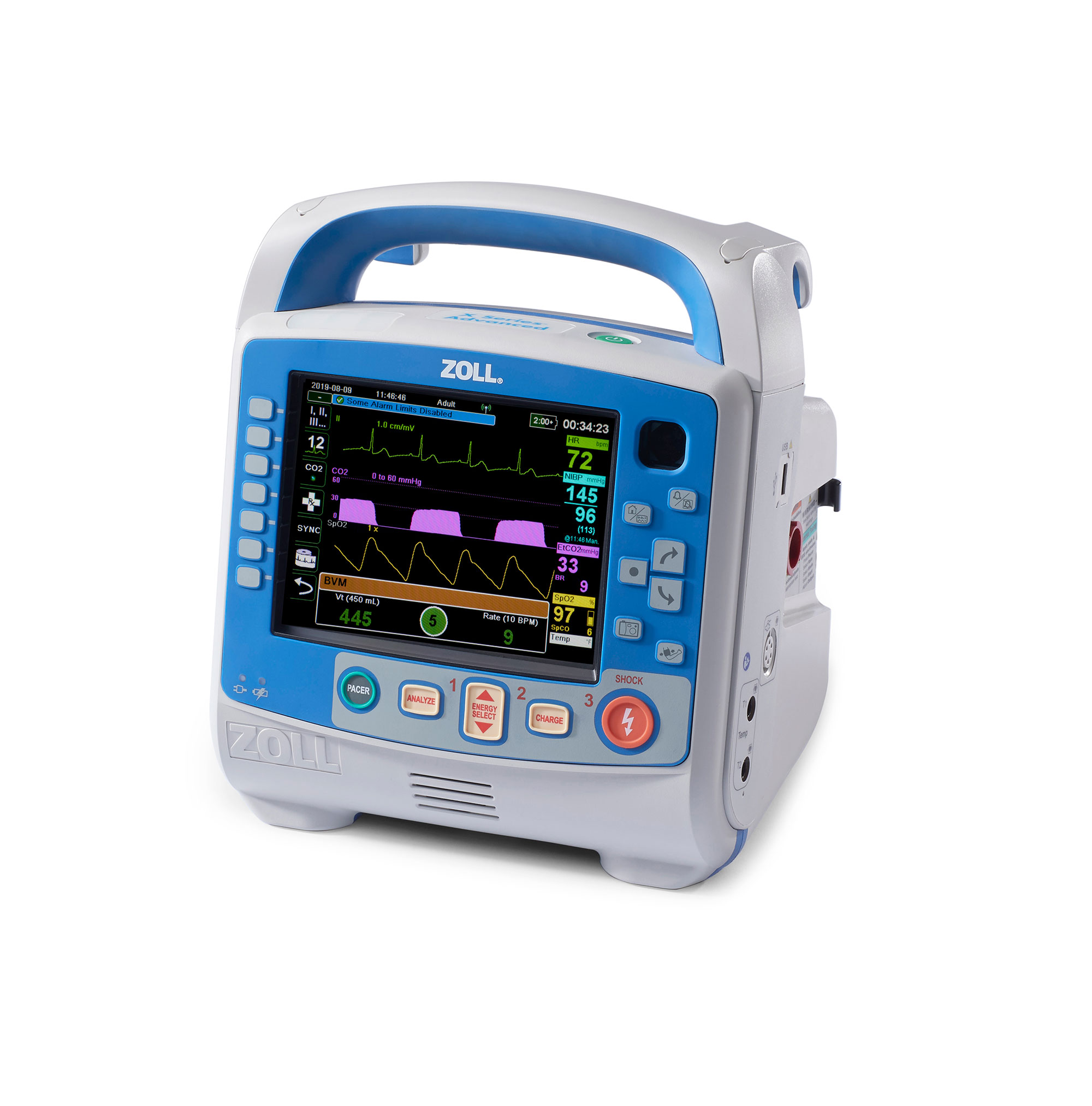
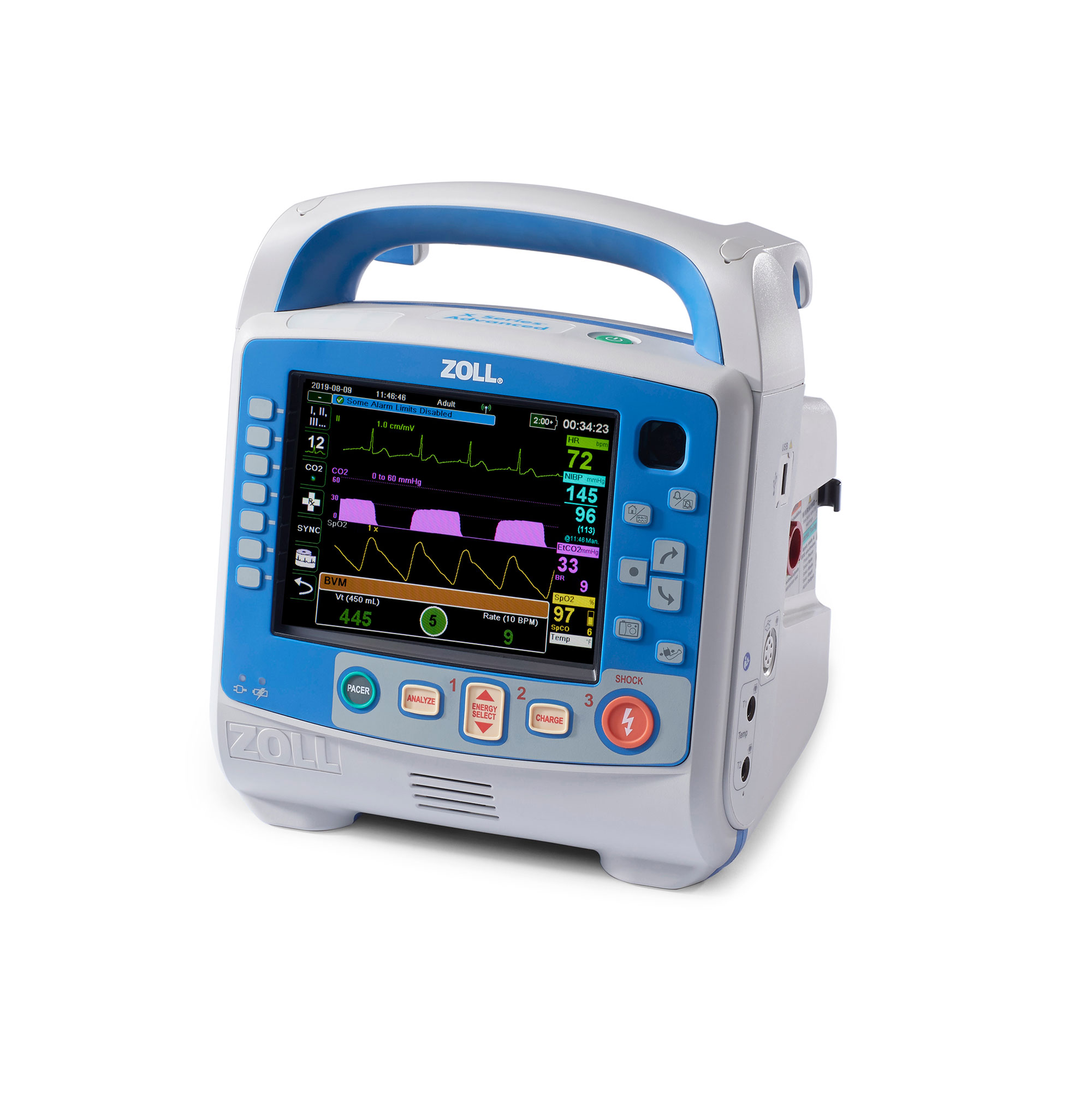
Real BVM Help technology displays target and delivered tidal volume and rates. This real-time feedback helps rescuers provide high-quality manual ventilation in a manner that has never been possible — until now.
Early treatment is critical for TBI patients. ZOLL's TBI Dashboard on the X Series Advanced monitor/defibrillator provides trending information on essential TBI patient management parameters. It helps rescuers quickly detect and respond to signs of patient deterioration.
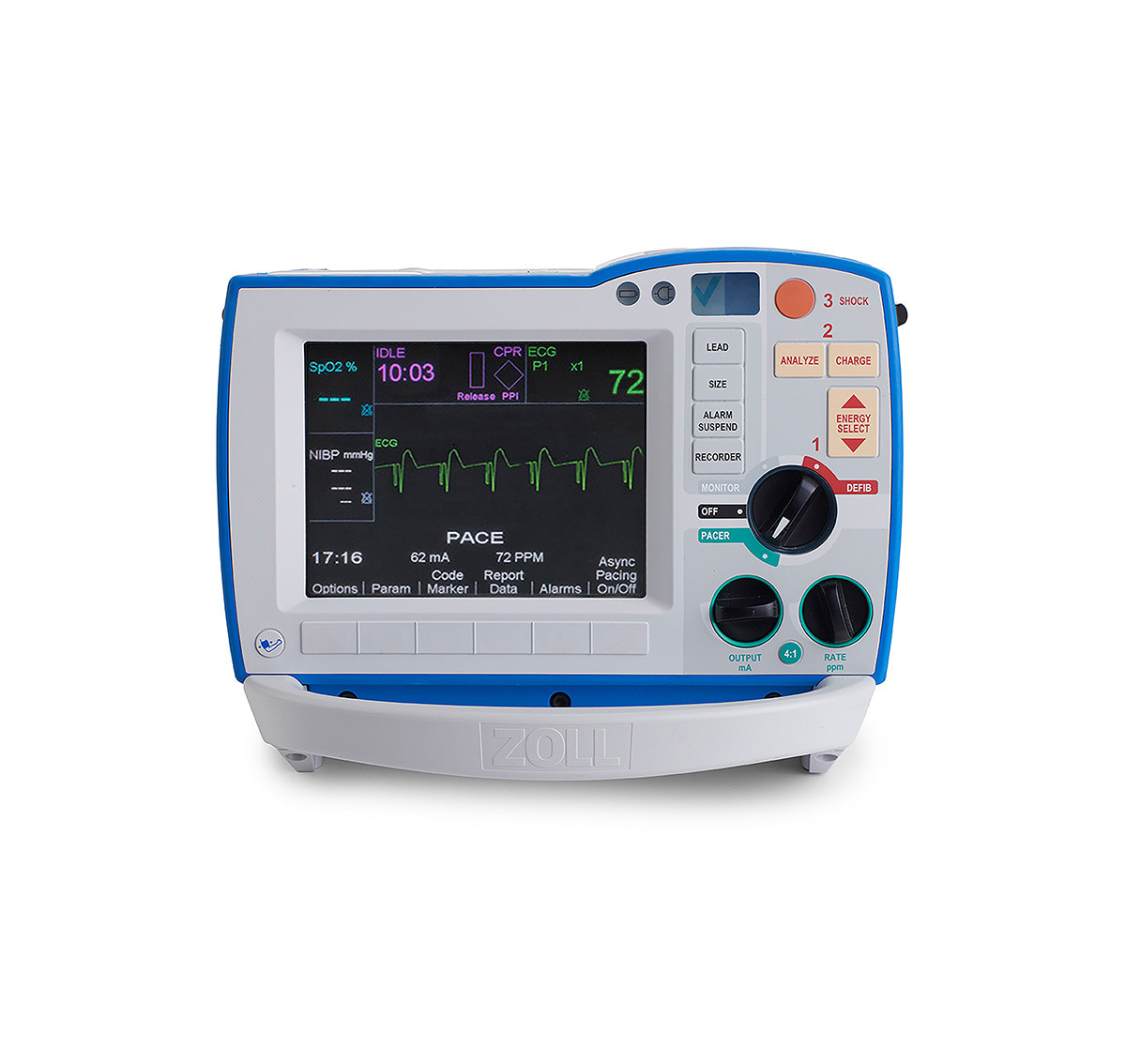
Delays in compressions are sometimes necessary to monitor the patient’s response, but they can lower the chances of a successful shock. ZOLL’s patented See-Thru CPR technology makes it possible to quickly determine whether there is a shockable rhythm, reducing these pauses.
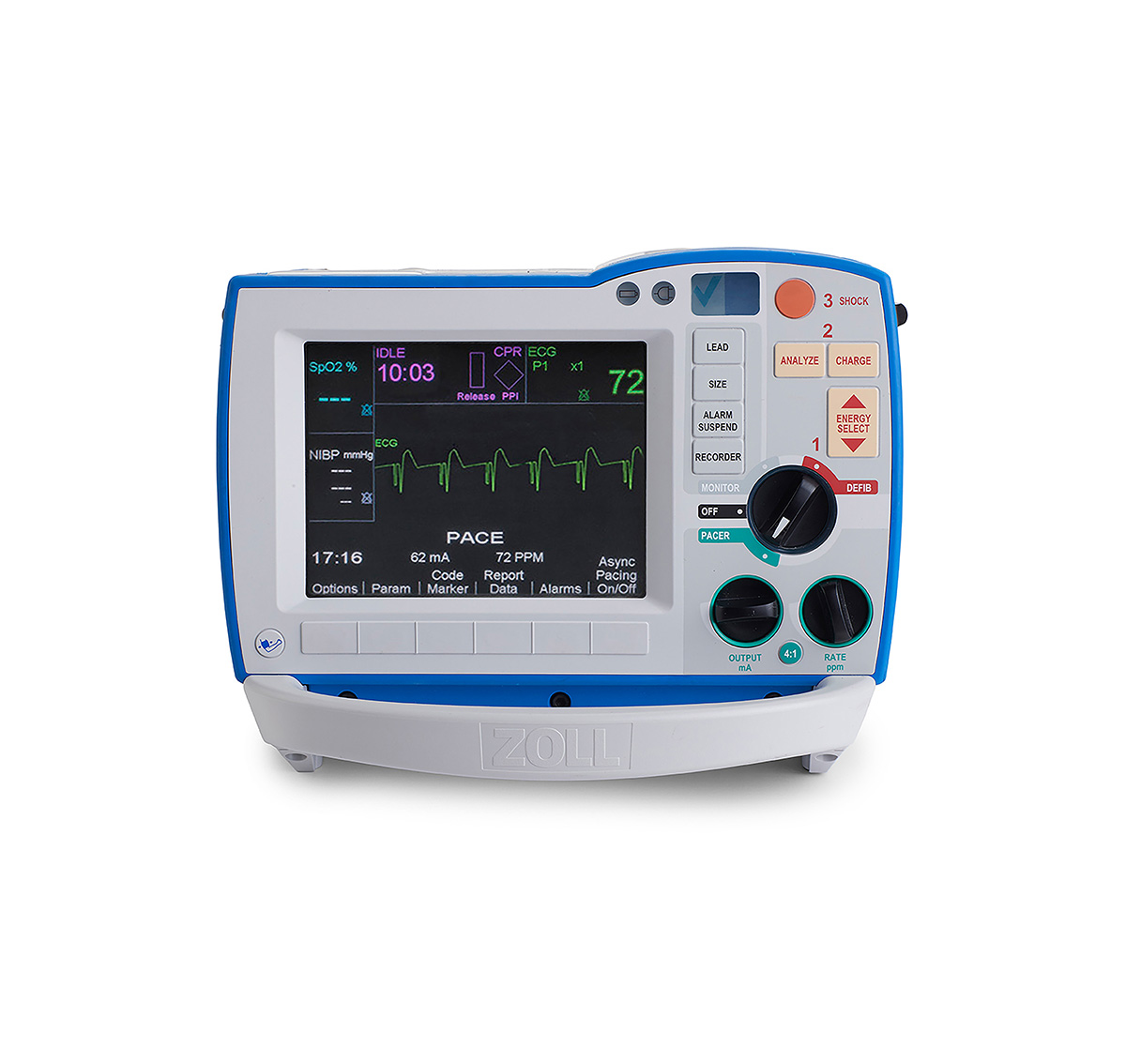
Delivering therapy is easy with the OneStep™ family of electrodes. Monitor, defibrillate, or pace—without the need for a separate three-lead ECG cable—with OneStep Complete electrodes.
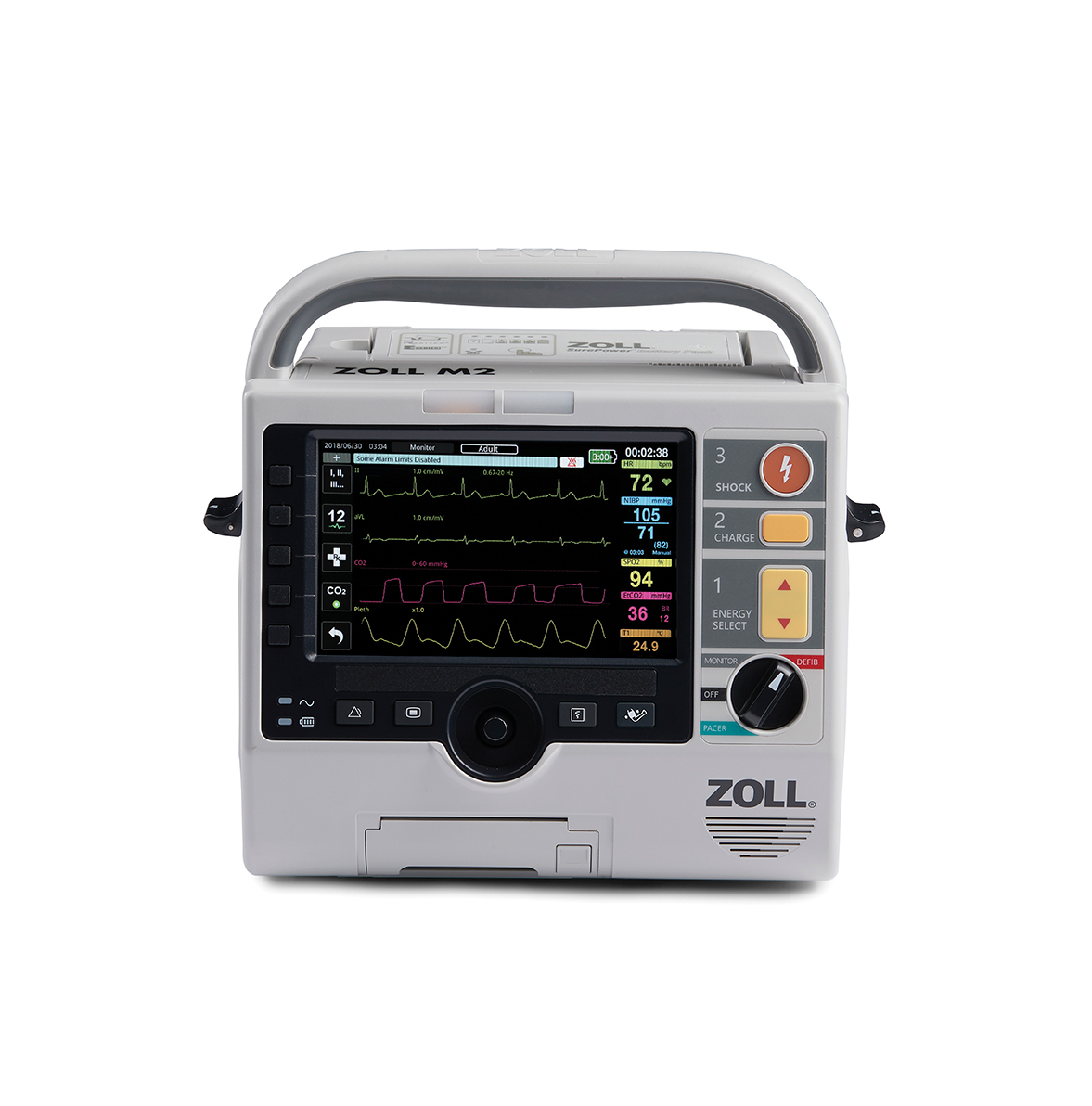
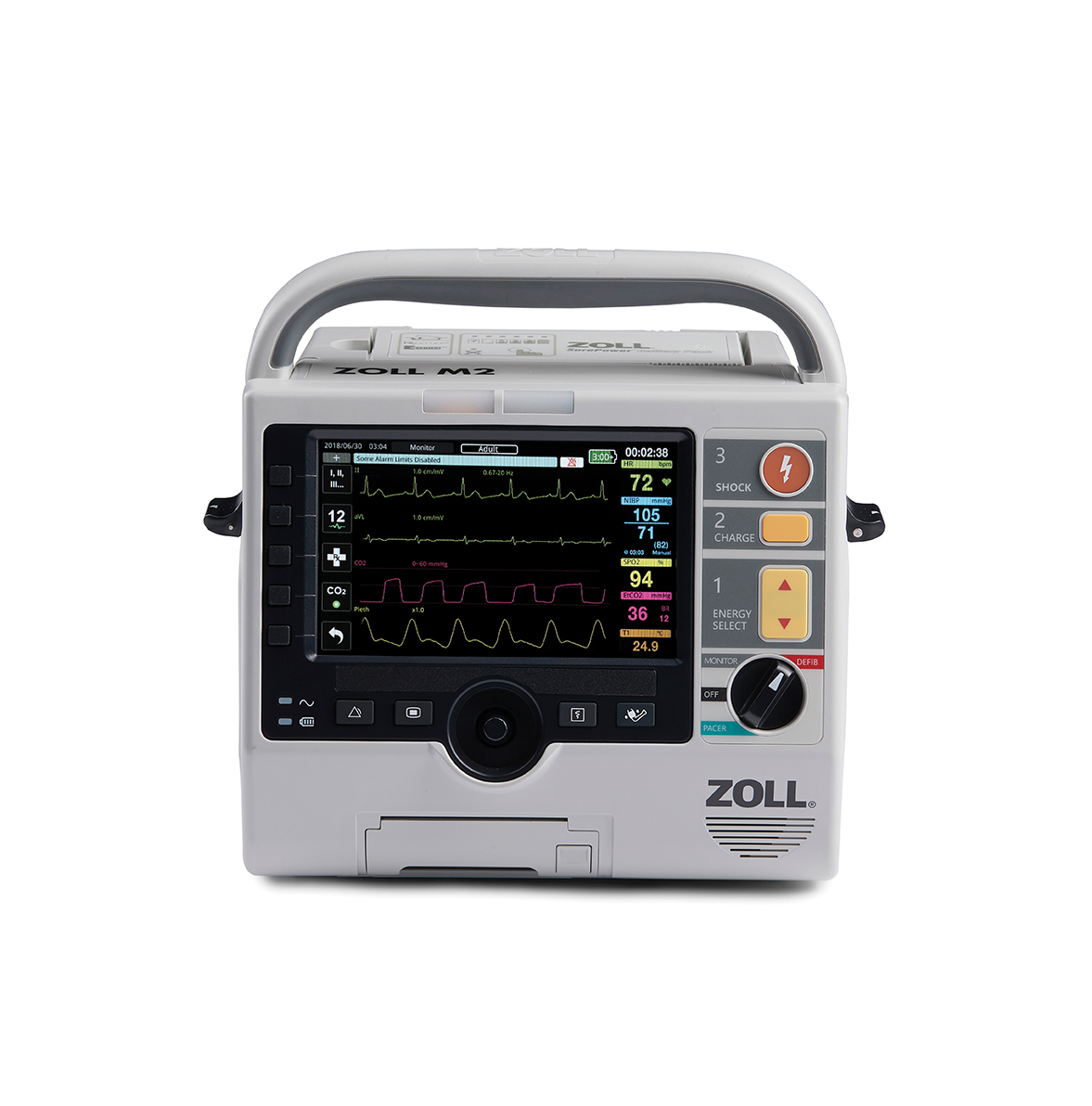
The ZOLL M2 professional monitor/defibrillator* helps you deliver high-quality resuscitation care to adult and paediatric patients, with an array of features, including:
1. CPR feedback — helps providers achieve high-quality CPR
2. Cardioversion and pacing — for patients with tachycardia and bradycardia
3. AED mode for adults and paediatric patients — guides rescuers through cardiac resuscitation events with proven algorithms for adults and paediatric patients
Aligning with ZOLL’s platform of resuscitation products, ZOLL M2 also promotes consistent, high-quality CPR and high-current defibrillation using ZOLL technologies, including:
1. Real CPR Help® — ZOLL has long recognized the importance of CPR feedback. Our Real CPR Help technology is used worldwide, helping clinicians deliver high-quality CPR — the cornerstone of successful resuscitation.
2. CPR Dashboard™ — When used with ZOLL’s CPR accessories, ZOLL M2 provides audio and visual feedback that guides rescuers to deliver high-quality CPR.
3. ZOLL Rectilinear Biphasic™ waveform — ZOLL defibrillators with a Rectilinear Biphasic waveform (RBW) provide more current than the “high-energy” biphasic waveforms used by others. This capability is particularly important for the difficult-to-defibrillate, high-impedance patient.1,2